This guide does not rank suppliers and it does not promise prices. It gives buyers a practical way to review sanitary ware offers from Egypt before accepting a sample or confirming an order. The safer path starts with a written specification, sample evidence, packing details, and a clear document expectation. Once those points are defined, price comparison becomes more meaningful.
Short answer for buyers
If you are considering sourcing sanitary ware from Egypt, ask for sample evidence tied to a written specification. A product photo or a broad product name is not enough to support a buying decision. The decision angle is assessing sanitary ware through body material, glaze quality, size, fitting holes, accessories, and breakage or scratch protection. That means the offer should explain what will be supplied, how the sample represents the lot, what tolerances apply, and what packing evidence will be available before shipment.
What to define before comparing offers
A fair comparison starts when offers are based on the same specification. If one supplier quotes a different grade, size, yarn count, finish, or packing method, a lower price may simply reflect a different product. Use a compact RFQ table. It does not need to be complicated; it only needs to capture the details that would change the receiving decision or the repeat-order decision.
| Item | What to request | Why it matters |
|---|---|---|
| Specification | ceramic body or material type | Prevents non-equivalent comparisons |
| Sample | close photos of glaze and edges | Connects the decision to visible evidence |
| Packing | foam, carton, and inner protection | Affects storage and receiving checks |
| Documents | Commercial invoice, packing list, and official checks where needed | Reduces pre-shipment discrepancies |
Quality evidence to request
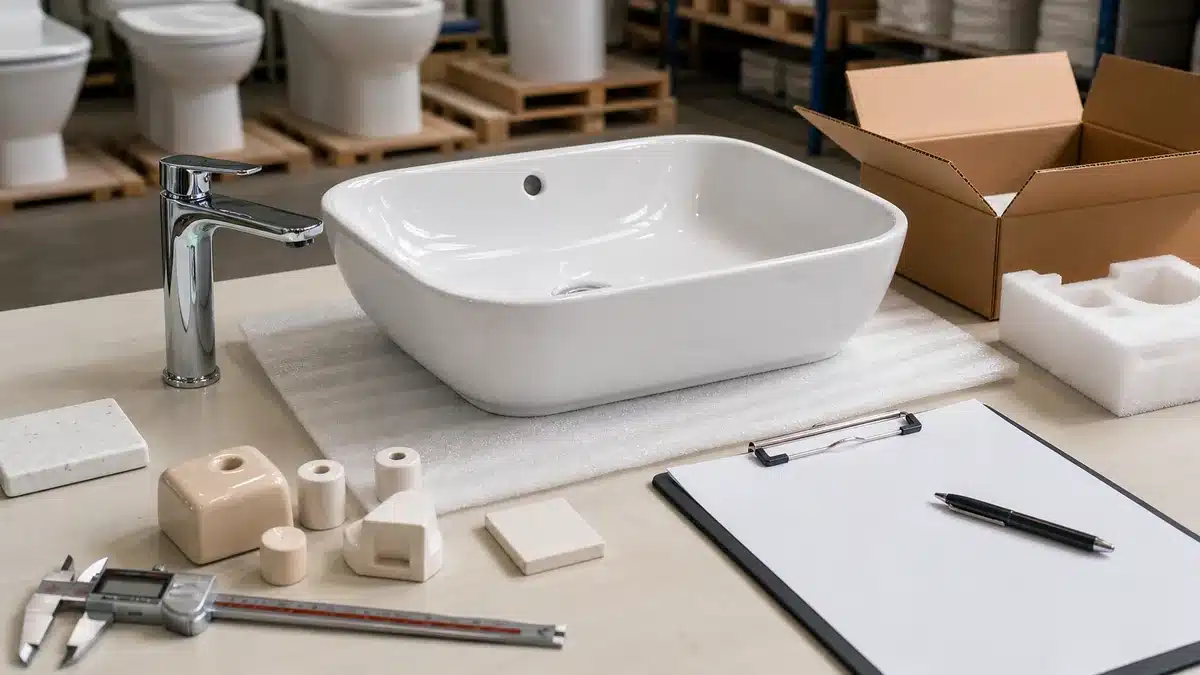
Ask for evidence that can be reviewed, not broad promises. Evidence should help you compare the sample, lot, packing, and document pack against the same written specification. Useful evidence for this topic can include: close photos of glaze and edges, written dimensions table, photo of holes and fixing points, packing content confirmation, photo of foam or divider protection. If the destination market has technical or customs requirements, confirm them with a qualified local importer, broker, or official source before approving the order.
- close photos of glaze and edges
- written dimensions table
- photo of holes and fixing points
- packing content confirmation
- photo of foam or divider protection
Common risks to reduce
Most sourcing disputes begin with ambiguity. A small undefined point can later become a disagreement about quality, packing, quantity, or responsibility. Use this article as a buyer checklist, not as legal, customs, or logistics advice. It does not guarantee shipping cost, clearance, delivery time, tariff treatment, or supplier availability.
- comparing prices without comparing body and glaze
- missing hole positions or dimensions
- not checking small cracks
- packing that cannot handle repeated handling
How to write a safer RFQ
Write the RFQ as a structured brief, not as a broad message such as "send your best price for sanitary ware." Start with use case, then specification, sample evidence, packing format, and the response format you expect. Ask the supplier to separate product quote, packing assumption, minimum order quantity, indicative preparation time, available documents, and points that require later confirmation. Separating these points makes comparison easier. Keep a copy of every answer and revision. If the sample, packing, carton weight, or loading method changes, request written confirmation again. That makes the transaction reviewable.
- intended use
- written specification
- sample evidence
- packing method
- required documents
- preferred response format
What to review when goods arrive
Receiving checks should compare the delivered goods against the approved sample, written specification, packing agreement, and any loading photos or document pack shared before shipment. If something differs, document it with photos, notes, lot references, carton markings, and dates. Organized evidence helps with supplier review and future orders.
A small rule before approving the lot
Before approving a sanitary ware lot, ask the supplier to restate the core specification in one message: product, grade or size, reference sample, packing method, and expected preparation timing. The point is not to slow the deal; it is to prevent old and new message threads from contradicting each other. If you work with a local importer, broker, or receiving team in the destination country, share this short summary before payment or shipment. They may notice label, carton, document, or receiving details that are easy to miss during the first commercial discussion.
Useful internal next steps
Compare this logic with related Import Egypt textile guides so the buyer journey stays focused inside the same topic cluster.
- [Sourcing decorative natural stone from Egypt: buyer selection and inspection guide](/sourcing-decorative-natural-stone-from-egypt-buyer-selection-and-inspection-guide/)
- [Buying paper and carton packaging from Egypt in bulk: specification questions before ordering](/buying-paper-and-carton-packaging-from-egypt-in-bulk-specification-questions-before-ordering/)
- [Build a supplier communication plan across languages](/build-a-supplier-communication-plan-across-languages/)
Practical conclusion
Sourcing sanitary ware from Egypt is safer when the buyer starts with specification discipline instead of unsupported claims. Request sample evidence, document the offer, and review packing before committing. The next practical step is to send a short RFQ that states use case, specification, sample evidence, packing requirement, and expected response format.
FAQ
Does this article recommend suppliers?
No. It explains how to review offers and evidence without ranking or naming suppliers.
Should buyers choose by price first?
No. Define the specification, sample, and packing before comparing price.
Does this replace destination-country checks?
No. Use a qualified local adviser, broker, importer, or official source for regulated requirements.
What is the first practical step?
Prepare an RFQ that states use case, specification, sample evidence, packing, and required documents.